MetaMusic Tag Generator
An AI web app that generates sync licensing metadata from an uploaded audio track
- Context
- CS 394 — Agile Software Development, Northwestern. Team project for a real client, Robert Bismuth of Solo Hands Music LLC.
- Role
- Team member — full-stack contributor
Problem
Sync licensing platforms require tracks to carry standardized Disco metadata — genre, mood, instruments, vocals, tempo, lyric themes, artist references. Musicians and music supervisors tag this by hand, which takes hours and leaves tracks less discoverable when it’s skipped.
What It Does
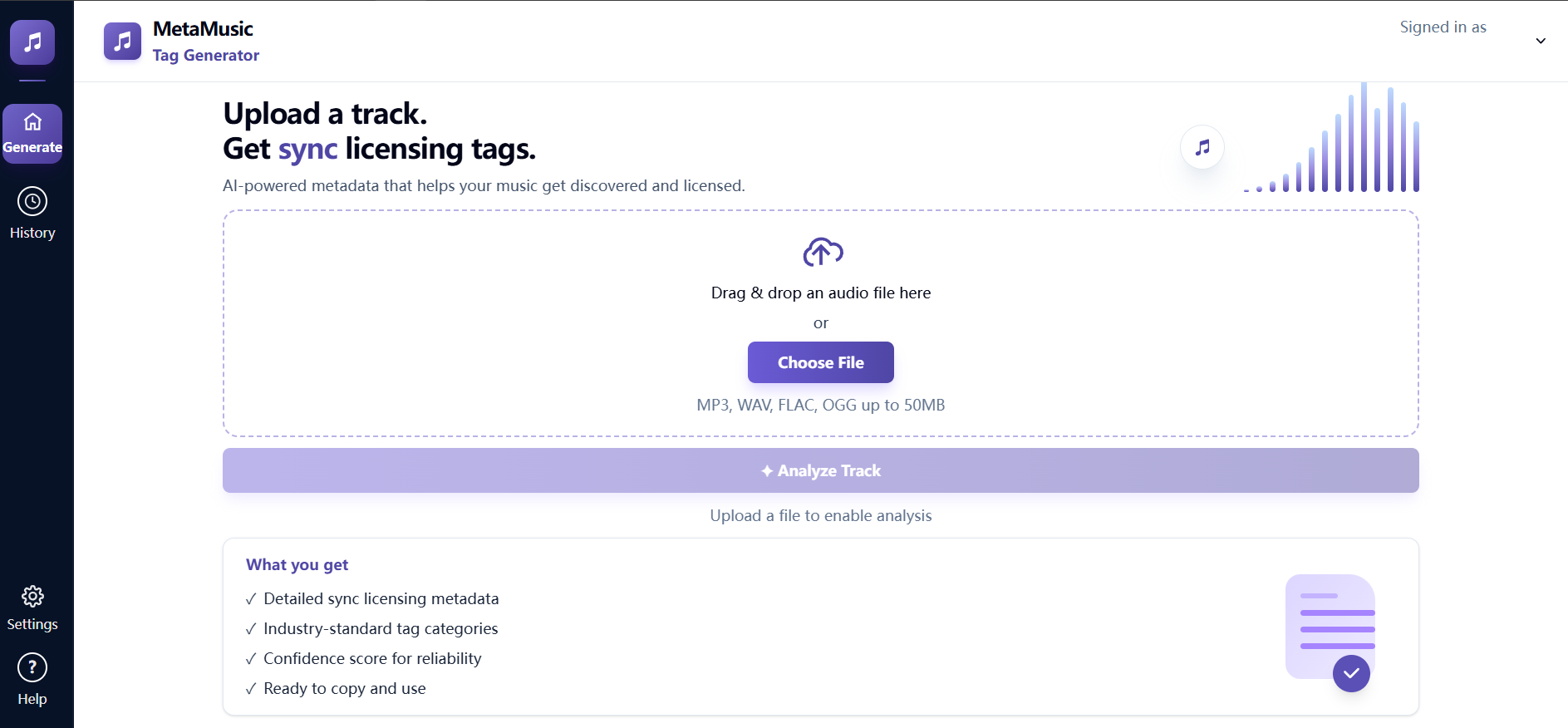
Upload an MP3, WAV, FLAC, OGG, M4A, or AIFF file up to 50 MB and the app returns a full set of Disco tags with a confidence score. Tags can be edited inline, refined by describing the change in a chat interface, exported as CSV, and are saved to per-user analysis history.
Screenshot — the app
Architecture
Three layers: a frontend SPA, a backend feature-extraction and tagging service, and Firebase — with the frontend talking to Firebase directly rather than proxying through the backend.
Process
Worked in GitHub Projects with a swarmed user story backlog, prioritized into sprints. Every feature required a written story spec with acceptance criteria in docs/agent/stories/ before any code was written. TypeScript strict mode with no escape hatches without an ADR, ESLint and Prettier enforced by a pre-commit hook, and lint, tests, and build all required to pass before any PR.